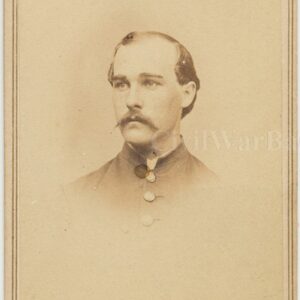
Description
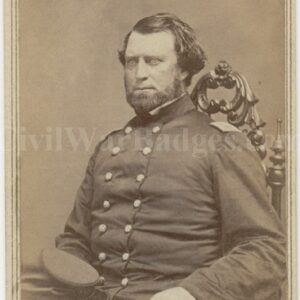
F. GUTEKUNST OF PHILADELPHIA BACKMARK Born: 06/14/1805 in Louisville, KY Died: 10/26/1871 in Nice, France USMA: 1825, class rank: 15/37 Promotions Date To Rank Full/Brevet Army/Vol Comments 05/15/61 Brig-Gen Full Army 02/03/65 Major-Gen Brevet Army Commands From To Brigade Division Corps Army 05/28/61 10/08/61 Dept and Army of Ohio and Cumberland Anderson, Robert, brigadier-general, was born near Louisville, Ky., at a place called "Soldier's Retreat," June 14, 1805. In 1825 he was graduated at West Point and received a commission as second lieutenant in the 3rd artillery. During the Black Hawk war, in 1832, he served as colonel of the Illinois volunteers, and after that, from 1835 to 1837, acted as instructor in artillery at West Point. He was brevetted captain for services in the Florida war then was for a time attached to the staff of Gen. Scott as assistant adjutant-general, and in 1841 was promoted to captain. He also served in the Mexican war, and was severely wounded in the battle of Molino del Rey. In 1857 he was appointed major of the 1st artillery, and in 1860 assumed command of the troops in Charleston harbor, with headquarters at Fort Moultrie. Owing to threatened assaults, Maj. Anderson withdrew his command, on the night of Dec. 26, 1860, to Fort Sumter, where he remained until forced to evacuate, on April 14, 1861, after a bombardment of thirty-six hours, to which he replied until forced by the disabling of his guns to yield. In recognition of his services at Fort Sumter he was appointed by President Lincoln brigadier-general in the U. S. army, and was assigned to command the Department of Kentucky, being subsequently transferred to that of the Cumberland. On account of failing health he was relieved from duty in Oct., 1861, and was retired from active service on Oct. 27, 1863. On Feb. 3, 1865, he was brevetted major-general, U. S. A. In 1869 he sailed for Europe in search of health, and died there, at Nice, France, Oct. 27, 1871. He was the translator from the French of "Instructions for Field Artillery, Horse and Foot", and "Evolutions of Field Batteries." To his personal efforts credit is due for the original steps in the organization of the Soldiers, home in Washington, which has since then sheltered many thousands of Civil war veterans .